
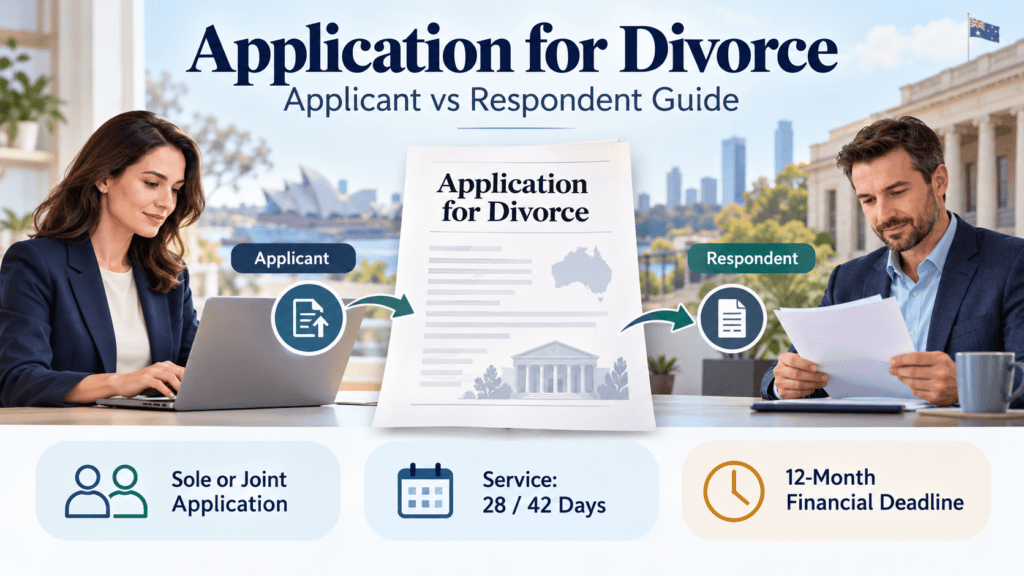
An applicant is the person who submits a divorce application to the Federal Circuit and Family Court of Australia. In Australia, either spouse can file for divorce alone, or both partners may choose to apply together. When only one spouse files, that person is the applicant, and the other spouse is the respondent. To start the divorce process, the applicant must complete and file the Application for Divorce, typically online through the Commonwealth Courts Portal. The applicant needs to provide the required information to the Court and pay the appropriate filing fee, unless they qualify for a reduction or have made alternative arrangements.
Applicant in a Sole Divorce Application
In a sole divorce application, one spouse (the applicant) files the necessary paperwork with the Court and serves it on the other spouse (the respondent), who does not need to sign the application. Proper service is important to notify the respondent of the proceedings. If the respondent is in Australia, documents must be served at least 28 days before the hearing; for those overseas, the timeframe is typically 42 days. The applicant must also file proof of service. Completing these steps is essential to progress in the divorce process.
Joint Applicants in a Joint Divorce Application
A joint divorce application is different. A joint divorce application involves both spouses participating equally in the process, with neither being designated as a respondent. Both must sign the required documents, and service on the other spouse is unnecessary because both are involved in the proceedings. This collaborative approach can simplify administration, but both parties still must meet the legal requirements for divorce as stipulated by the Court.
What Is a Respondent in a Divorce Application?
A respondent is the spouse named in a sole divorce application filed by the other spouse. The respondent receives the divorce documents through a service process and should read the application carefully. If the respondent agrees with the information and does not oppose the divorce, they might not need to file a response to divorce. However, if the respondent disagrees with any information in the application or wants to contest the divorce, they can take further steps.
The respondent may also request to attend the divorce hearing if the Court allows it. Remember, being a respondent does not mean they are the opposing party; it is simply a procedural label.
Is the Respondent Automatically Opposing the Divorce?
Being a respondent to a divorce does not mean you oppose it. No matter if you agree to the divorce, you are the respondent if your spouse files first. You can contest the application by filing a response to divorce to correct inaccuracies. As a respondent, you can acknowledge receipt of the divorce papers, request to attend the hearing, or submit a statement to clarify or challenge the divorce order.
Does the Respondent Have to Sign the Divorce Application?
In a sole divorce application, the respondent does not have to sign the original Application for Divorce. The applicant files a sole application. Depending on what the respondent decides, other documents may be needed. This is different from a joint application. In a joint application, both spouses are joint applicants, and both must sign the relevant documents.
Applicant vs Respondent: What is the Difference in a Application for Divorce?
The simplest distinction is:
| Applicant | Respondent |
| Starts a sole divorce application | Receives the sole application |
| Files the application | Reviews the application |
| Signs the required applicant documents | Does not sign the original sole application |
| Must arrange service in a sole application | Receives the served documents |
| Can request a divorce order | Can respond or oppose |
| May need to attend depending on circumstances | May need to attend depending on circumstances |
The difference is mainly procedural. It does not mean that one spouse is legally “right” and the other is “wrong”. The applicant is simply the party who starts the proceeding. The respondent is the other party. If both spouses file together, there is no respondent. Both are joint applicants. Understanding these terms can prevent confusion when reading court documents.
What Does the Applicant Have to Do?
The applicant’s responsibilities depend on whether the application is sole or joint.
For a sole application, the applicant generally needs to:
- Complete the Application for Divorce.
- Provide the required information and supporting documents.
- Sign the required affidavit.
- Have the affidavit properly witnessed.
- File the application online.
- Pay the filing fee or apply for an available reduction.
- Arrange service on the respondent.
- File evidence of service.
- Attend the hearing if required.
- Provide additional evidence if the Court requires it.
Make sure every detail is correct before filing. Errors can delay the process or lead to requests for more information. Applications are generally eFiled through the Commonwealth Courts Portal.
Filing the Divorce Application
To start the divorce process, the applicant fills out the online Application for Divorce. This application asks for information about marriage, separation, children, and other important details. The applicant must also complete the Affidavit for eFiling Application (Divorce). If it is a sole application, only the applicant must sign this affidavit. An authorized person, like a lawyer or a Justice of the Peace, must witness the signature.
Serving the Respondent
Service is crucial for distinguishing between sole and joint divorce applications. In a sole application, the applicant must ensure the respondent is properly served with documents that inform them of the proceedings. Respondents in Australia need 28 days’ notice before the hearing, while those outside Australia need 42 days. The applicant must provide proof of service, and if the respondent cannot be located, they may need to apply for substituted service or a waiver.
What Does the Respondent Have to Do?
After receiving a sole divorce application, the respondent should read all documents carefully.
The respondent should check details such as:
- Names and dates.
- Marriage information.
- Separation information.
- Details about children under 18.
- Any claims about living arrangements.
- The requested divorce order.
The respondent can acknowledge service. They can also request to attend the hearing where appropriate. If they disagree with information in the application or oppose the divorce, they can file a Response to Divorce. The respondent should act promptly because procedural deadlines can apply.
Do the Applicant and Respondent Have to Attend Court?
Most divorce hearings before a Judicial Registrar are conducted by webconference (or phone). Whether you must attend depends on your specific circumstances:
- Sole Application with Children Under 18: The applicant must attend the hearing unless they have a lawyer representing them. Before granting a divorce, the Court must ensure that there are proper arrangements for the care, welfare, and development of any children from the marriage, according to Section 55A of the Family Law Act.
- Sole Application without Children Under 18: Neither party is required to attend, provided all documents and service proofs are in order.
- Joint Application (With or Without Children): Neither party is required to attend the hearing.
- If a Response to Divorce is Filed: Both the applicant and respondent must attend the hearing. The Court may grant the divorce if the respondent fails to appear and opposes the application.
- Special Circumstances: Attendance is generally required if the application concerns substituted/dispensed service or requires additional evidence regarding separation under one roof.
What Happens After the Divorce is Granted?
Once the Court approves the application, there are two crucial post-divorce rules to remember:
- When the Divorce Becomes Final: A divorce does not become final on the day of the hearing. The Court issues a Divorce Order, but it only becomes final one month and one day after the hearing. Neither spouse can legally remarry until that date passes.
- The 12 Month Financial Deadline: A divorce ends the marriage, but it does not decide on property division or spousal support. After the divorce order is finalized, you have exactly 12 months to finalize property settlements or to file financial claims in court. If you miss this deadline, you will need special permission from the Court, which is hard to get.
FAQs
Does the respondent have to agree to a divorce?
A respondent does not need to sign the original divorce application. However, if they want to oppose the divorce, they should submit a response to the Court.
Can the respondent refuse to sign divorce papers?
A respondent does not need to sign the original divorce application, and refusing to do so does not stop the process. If they have valid reasons to oppose, they should respond formally during the proceedings.
Can the respondent stop a divorce?
A respondent may oppose an application, but simply refusing to cooperate does not automatically stop the divorce. The Court decides whether the requirements for a divorce order have been met.
Who pays for the divorce application?
The divorce filing fee is due when you file, and you may qualify for a fee reduction. For a sole application, the applicant handles the filing. In a joint application, both parties must meet eligibility requirements for any fee reduction.
What happens if the respondent does nothing?
The divorce application can proceed if the respondent does not oppose it and the applicant meets the legal requirements. However, the respondent should read the documents carefully to avoid missing important deadlines or rights.
Final Word
Being designated as either an applicant or a respondent is simply a matter of procedure; it does not imply that anyone is to blame. By following court rules, serving documents properly, and meeting key deadlines, you can keep the divorce process smooth and straightforward. Take time to review your paperwork carefully, and do not hesitate to seek professional help if disagreements come up.