
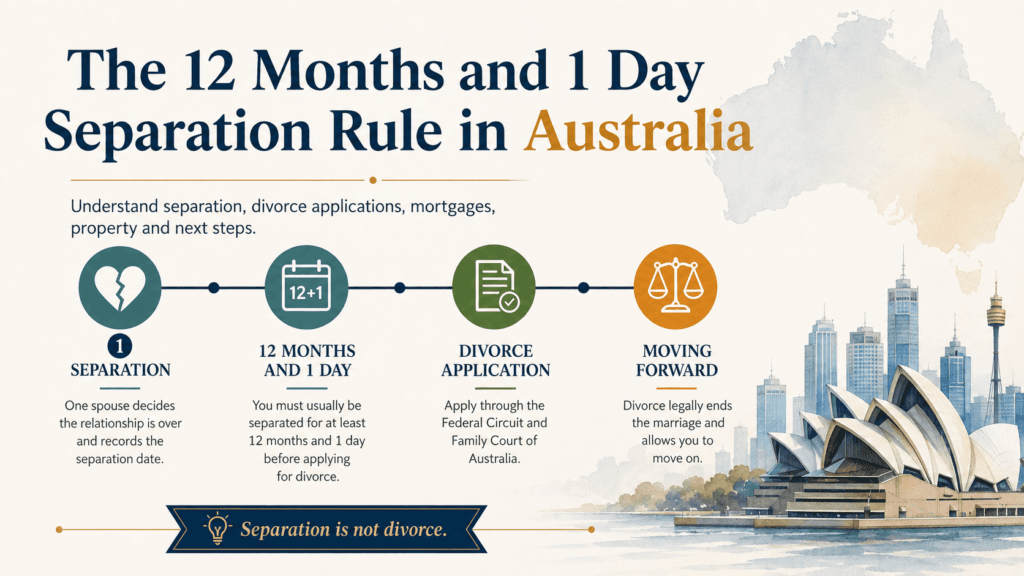
Ending a relationship is never easy emotionally, financially, or legally. Australian divorce law governs how married couples divide assets, shift parenting responsibilities, and formalize separation. It is important to know your rights and obligations from the outset to reach a fair and less stressful result. We have broken down the key principles of separation law in Australia, so that you can move forward with clarity and confidence.
What Is Separation Under Australian Law?
One spouse can start the separation. Both spouses do not need to agree on the separation date. This date matters because the 12 months and 1 day period starts from it. One spouse must see the marriage as over and show this intention. Making practical changes can also help show that separation has happened.
These may include:
- Living in separate bedrooms
- Separating finances
- Eating meals separately
- Stopping social activities as a couple
- Informing family and friends
- Making separate household arrangements
- Changing the way childcare is organised
- Ending a sexual relationship
- Applying for government benefits as separated, where applicable
No single factor necessarily proves separation. The circumstances must be considered as a whole.
What Is the 12 Months and 1 Day Separation Rule?
The 12 months and 1 day rule in Australia means you usually cannot apply for divorce until you have been separated for at least 12 months and 1 day. For example, if you separate on 10 January 2026, you can file for divorce starting 11 January 2027. This rule shows that the marriage has fully ended. The court must also be sure there is no chance the couple will reconcile.
Remember, just because the time has passed does not mean you are automatically divorced. The separation period allows you to apply, but it does not end the marriage.
Why Is the Separation Period Required?
Australian divorce law uses separation to show a marriage has ended. Australia has a no-fault divorce system. The court does not decide who caused the breakup. The 12-month separation shows the relationship is truly over. You do not have to prove adultery or abandonment. The main question is whether the marriage has broken down.
What Happens If You Reconcile During the Separation Period?
A genuine reconciliation can change the separation period. If you reconcile, the original separation date may no longer apply. Short reconciliations are treated differently from fully resuming married life. The details of your situation are important. If you reconcile within a year, consult a lawyer before using the original separation date.
Separation vs Divorce: What Is the Difference?
Separation and divorce are different. Separation means the marriage has ended in practice. Divorce legally ends the marriage. You can be separated without being divorced. Living apart for 12 months does not mean you are divorced. You must apply to the court for a divorce. Divorce is separate from property and parenting issues. This difference is important. Couples can sort out property and parenting matters before divorcing. Getting divorced does not automatically split property or settle parenting issues.
Is Legal Separation Required Before Divorce?
In Australia, there is no separate court order for “legal separation” before divorce. You need to show that the marriage has ended and meet the separation period. You can separate without filing a legal-separation application. However, separation can lead to important issues about property, debts, children, maintenance, and benefits. It is a good idea to get legal advice to protect your interests.
Does Separation Automatically End a Marriage?
Separation does not end a marriage. The only way to legally end a marriage is through a divorce. A divorce is recognized by the court as the official end of a marriage. You can stay married for many years after separating. This can affect your future relationships, estate planning, and financial matters. If you want to remarry, you must get a divorce first.
How to Start Separation Process in Australia
There is no single form to start a separation. The first step is to set and record the separation date. Next, address immediate issues like housing, money, kids, and communication. Identify shared assets and debts. Consider getting legal advice early on. You do not need to go to court right away. Many couples handle parenting and financial arrangements on their own or with mediation.
Step 1: Confirm the Separation Date
Pick a date when the relationship officially ended. Clearly say that the relationship is over. Keep a record of how you communicated this. Do not leave any doubt that the separation is permanent. If you still live together, note the changes that happen after the separation.
Step 2: Organise Living and Financial Arrangements
When deciding how to pay household expenses, review your financial obligations. These include mortgage payments, rent, utilities, insurance, credit cards, loans, and child-related costs. Joint debts remain, even if one person moves out. Individuals are still responsible for any co-signed loans. Clear arrangements for these expenses can help avoid conflicts. This way, all financial responsibilities can be managed effectively.
Step 3: Make Parenting Arrangements
Make practical arrangements as soon as you can if you have kids.
Consider:
- Where children will live
- School arrangements
- Transport
- Holidays
- Healthcare
- Communication
- Financial support
- Time with each parent
It is recommended that parents reach agreements whenever possible.
Step 4: Record Important Documents
Create copies of:
- Marriage certificate
- Birth certificates
- Mortgage documents
- Bank statements
- Tax records
- Superannuation records
- Insurance policies
- Property records
- Investment records
- Loan documents
- Parenting records
Keep important documents somewhere secure.
How Does Divorce Work in Australia?
Australia has a no-fault divorce system focused on irretrievable marriage breakdowns. To apply, you must show that the marriage has ended, reconciliation is impossible, separation has lasted at least a year, and jurisdiction requirements are met. A marriage certificate, translated if not in English, is required. Include the details of any children under 18, whether you file jointly or individually, on the Commonwealth Courts Portal. You may contact Au Divorce if all these things are too burdensome for you to handle. Before applying, make sure you know the current fees and eligibility requirements.
Who Pays the Mortgage After Separation Australia
No rule requires the person living in the home to pay the mortgage. If both spouses are on the loan, both are responsible. Joint borrowers owe the entire loan, even if one moves out. Separation does not change the contract with the lender. The lender can still demand payment from either borrower. The couple should talk about temporary payment plans while settling the property. Do not stop making payments without thinking about the impact. Missed payments can hurt both borrowers.
What If One Person Stops Paying?
Borrowers who stop paying may still owe the loan to one another. Contact the lender immediately if payments are difficult to make. Keep track of every payment you make. Also note who pays for rates, insurance, repairs, and other costs. These notes can help with money issues later. A property settlement should look at all finances, not just the mortgage.
What Is a Separation Certificate?
In Australia, there is no official document called a certificate of separation. This term is often used informally. People may use letters or records as proof of separation. Useful evidence includes financial records and tenancy documents. The type of evidence needed depends on the situation. For example, if you apply for a divorce while living together, you will need special evidence and affidavits.
Can You Get an Automatic Divorce After Long Separation Australia?
There is no automatic divorce in Australia after living apart. You can apply for divorce after 12 months and 1 day of separation, if other requirements are met. Separation does not automatically end the marriage. Divorce applications must be filed with the Federal Circuit and Family Court. You must meet eligibility requirements to apply. To end the marriage, you must apply for divorce.
FAQS
What are the disadvantages of legal separation?
In Australia, there is no separate legal separation step before divorce. If a couple remains separated but is not divorced, they are still legally married and cannot remarry. Financial connections may continue, and matters involving property, debts, children, and future planning may still need to be settled.
Do I have to support my wife during separation in Australia?
Yes, you may still have financial duties after separation. Separation does not automatically release your obligations to your spouse. Matters such as mortgage debts, debts, living expenses, and possible spousal maintenance depend on your individual circumstances.
What happens if a couple is legally separated but not divorced in Australia?
A separated couple is still legally married until a divorce is granted by the court. They cannot remarry, and separation does not automatically divide property or resolve parenting matters. Couples can arrange property and parenting agreements while separated.
What not to do when separating?
When separating, avoid stopping mortgage or loan payments without advice and consider the consequences of major financial decisions. Also, do not hide assets or ignore arrangements for children during this process. It is also important to keep records and important documents safe.
What is a wife entitled to in a divorce in Australia?
A wife is not automatically granted to a certain share of property in an Australian divorce. The court considers factors such as both spouses’ assets and debts, financial and non-financial contributions, future needs, and arrangements for children. Divorce does not automatically split property.
Final Thoughts on Separation Law in Australia
Divorce is part of a broader separation process. The 12 month and 1 day rule is a key part of Australia’s separation laws. It sets the minimum separation period before a divorce application can be filed, not automatic divorce after 12 months apart. Separation raises practical issues such as mortgages, property, children, finances, government payments, and personal paperwork. Before making important decisions, consult independent legal advice on issues such as property, child custody, finances, and safety.