
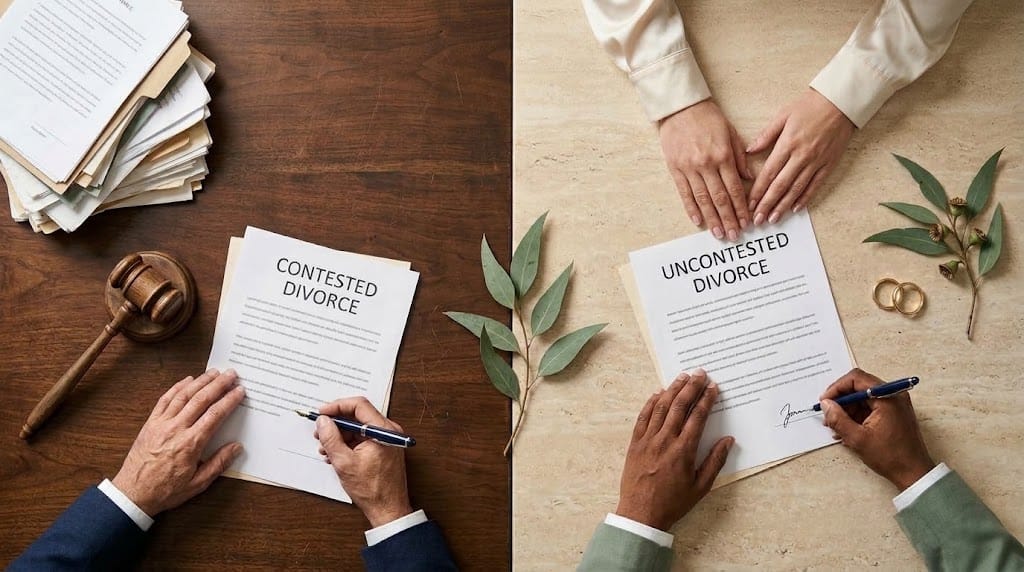
When a marriage ends, a pivotal question arises: Will the divorce be contested or uncontested? This choice can set the tone for the entire process and shape the path ahead as you navigate this major life change. Your answer affects the application process. It determines if you need to serve your spouse, how much cooperation is needed formally, and whether any extra court actions are necessary. However, Australian divorce law uses slightly different terminology. The Federal Circuit and Family Court of Australia generally deals with joint divorce applications and sole divorce applications. A joint application is made by both spouses. A sole application is made by one spouse and must generally be served on the other spouse.
Understanding this distinction can help you choose the right process.
What Is the Difference Between Contested vs Uncontested Divorce?
In Australia, though, the terms can cause confusion. The court does not grant or refuse a divorce based on who caused the relationship to end. Australia has a no-fault divorce system. The court considers whether the marriage has completely ended and whether the legal requirements for divorce have been met.
- A contested divorce occurs when one spouse opposes the divorce or disagrees on key issues the court must decide before finalizing it.
- An uncontested divorce generally means both spouses agree the marriage should end and no dispute prevents the divorce application from proceeding.
The standard requirement is that the parties have been separated for at least 12 months and 1 day before applying. Those matters can require separate legal proceedings. The more useful question is often: Will both spouses cooperate with the divorce application, or will one spouse oppose it?
What Is a Contested Divorce in Australia?
A contested divorce happens when the spouses disagree about the divorce or legal requirements. For example, one spouse might argue over the separation date or other details in the divorce application, leading the court to review more evidence. A sole divorce application is not automatically contested; one spouse can file on their own. In this case, the spouse filing for divorce must serve the other spouse with the papers.
If the other spouse disagrees or opposes the divorce, they can respond by filing a Response to Divorce. The main difference is whether the other spouse actively challenges the application, which allows the divorce to proceed without objection.
What Can Make a Divorce Contested?
The court may require affidavits explaining how the relationship changed during the separation period. If you have been living in the same home but are now separated, the court may ask for more evidence.
Common issues can include:
- Disagreement about the separation date
- A dispute about whether the marriage has broken down
- Disagreement about information in the divorce application
- An objection to the divorce itself
- Problems proving separation under one roof
What Is an Uncontested Divorce in Australia?
Uncontested divorces are usually associated with a cooperative process. Each spouse accepts that the marriage is over and is ready to divorce. One common way this happens is through a joint divorce application. Both parties have to sign the documents. As long as both spouses file together, the other party does not have to be served.
What Can Make a Divorce Uncontested?
A joint application can be simpler because both parties participate in the process. It does not mean every issue between the spouses must already be resolved. To apply for divorce, the parties generally must:
- Have been separated for at least 12 months and 1 day
- Satisfy the Australian eligibility requirements
- Establish that there is no reasonable likelihood of resuming married life
- Provide the required information and documents
- Complete the application correctly
- Pay the applicable filing fee or qualify for a reduction
Benefits of an Uncontested Divorce
A divorce where both parties agree to the terms can make the process easier. You and your spouse can both work from the same application, so you do not have to go through the service process for a separate application. It can also make talking to each other easy because everyone knows what information was sent. But working together does not mean you don’t have to follow all the laws.
Sole vs Joint Divorce Application
The difference between a sole and joint application is important when deciding how your divorce will proceed.
| Joint Application | Sole Application |
| Both spouses apply together | One spouse applies |
| Both are joint applicants | One is applicant and one is respondent |
| Both applicants sign required documents | Only the applicant signs the application |
| No service on the other spouse | Documents generally must be served |
| Usually suitable where both cooperate | Useful where spouses cannot apply together |
The FCFCOA uses the same online divorce application for both. The application is either solitary or joint, as determined by the applicant. The applicant must arrange service on the respondent with a single application. When the respondent is in Australia, you usually serve the divorce papers at least 28 days before the hearing. The normal duration is at least 42 days when the respondent is overseas. This additional step can make a solo application more complex. Because both parties are filing together, you will not be subject to this requirement if you file jointly.
Can Your Spouse Stop You From Getting a Divorce?
A spouse cannot stop a divorce just because they do not want it to happen. The court assesses if the marriage has genuinely ended and whether the divorce requirements are met. However, a spouse can contest the divorce by disputing the stated reasons or claiming the proper procedures were not followed. When served with divorce papers, a spouse can file a Response to Divorce, which the court will review to determine whether the divorce can proceed. Even if your spouse is uncooperative, you can still obtain a divorce, but you may need to take additional steps.
Does a Dispute About Property or Children Make a Divorce Contested?
This is one of the most critical nuances when discussing contested vs uncontested divorce. A divorce order legally ends the marriage. There is no final parenting plan or property division. As per the FCFCOA, divorce proceedings do not settle arrangements for kids, finances, or property.
For example, a couple could:
- Agree to divorce
- File a joint divorce application
- Still disagree about how to divide their property
A divorce can remain cooperative even when financial disputes arise. Parents may agree to end the marriage while still needing to address parenting issues, which can involve applications, negotiations, mediation, or court proceedings. Not all disagreements between separated spouses mean the divorce is contested.
Contested vs Uncontested Divorce: Costs and Time
The cost and timing of divorce can vary depending on how you handle the application. The court has a standard divorce filing fee and a lower fee for eligible applicants. This fee can change, so check the current amount before filing. A joint application may require fewer steps because you do not need to serve the other spouse. A sole application has more steps, including the need to serve the other spouse. The court also notes that each divorce application can be different, and sometimes more documents are needed. Once the divorce is granted, it usually becomes final one month and one day after the hearing, unless the court decides otherwise.
Why Divorce May Not Be the End of the Legal Process
A common mistake is thinking that everything’s settled once the divorce is done. But in reality, you can finish the divorce and still have issues with property and kids to sort out. Treating the divorce like the end of the road, instead of just one step in a bigger journey, can mess with your financial rights. Get legal advice early if you are not sure where you stand. This is especially true if your finances are tricky or you cannot agree on the kids or property.
FAQs
Can my spouse refuse to divorce me?
Your spouse can oppose a divorce application, but they do not have an automatic veto over the divorce. The court determines whether the legal requirements have been satisfied.
Do both spouses have to agree to a divorce in Australia?
No. You can apply alone through a sole divorce application. If your spouse does not cooperate, you generally need to serve the application on them.
Is a joint divorce application faster?
It can be simpler because both parties cooperate and there is no service requirement. However, the court must still process the application and determine whether the legal requirements have been met.
Does a contested divorce cost more?
Opposition may require additional documents, hearings or legal assistance. The filing fee itself is separate from professional legal costs.
Can a property dispute stop my divorce?
A property dispute does not automatically prevent a divorce. Divorce and financial or property proceedings are separate legal matters.
Conclusion
The difference between contested vs uncontested divorce is mainly about cooperation and opposition. There are two types of divorce applications in Australia: joint and sole. A respondent who actively challenges the application or the legal requirements makes things more complicated. It is important to remember that divorce does not resolve property, financial, or parenting issues. Check the Federal Circuit and Family Court of Australia’s requirements before filing and make sure your separation period and supporting information are accurate.